

Understanding 2-Way Switch Wiring Diagrams
Navigating 2-way switch diagrams, often found as PDF guides, requires understanding traveler wires and common terminals for effective control of a light fixture.
What is a 2-Way Switch?
A 2-way switch, also known as a double-pole, single-throw (DPST) switch, allows control of a single light fixture from two different locations. Unlike a standard single-pole switch, it doesn’t simply break or complete a single circuit. Instead, it redirects the flow of electricity through one of two “traveler” wires.
Understanding 2-way switch wiring diagrams, often available as PDF downloads, is crucial for proper installation. These diagrams illustrate how the common terminal connects to either of the traveler wires, depending on the switch’s position, effectively controlling the power to the light. This setup provides convenience and enhanced functionality in hallways, staircases, and larger rooms.
The Basic Functionality of 2-Way Switches
2-way switches function by utilizing a pair of “traveler” wires that connect both switches to the light fixture. Each switch alternates which traveler wire is connected to the power source, effectively toggling the circuit on or off regardless of the other switch’s position.
A clear 2-way switch wiring diagram, frequently found in PDF format, visually demonstrates this alternating connection. When one switch connects the power to a traveler, the other disconnects it, and vice versa. This allows either switch to independently control the light, providing flexibility and convenience. Studying these diagrams is essential for safe and correct installation.

Essential Components for 2-Way Switch Wiring
Key components include two 2-way switches, 14/3 wiring (with a ground), and wire connectors; PDF diagrams illustrate proper component identification.
Identifying the Common, Traveler, and Line/Load Terminals
Understanding terminal designations is crucial when referencing a 2-way switch wiring diagram PDF. The common terminal, often darker in color, receives power from the source or sends it to the light. Traveler terminals, typically brass-colored screws, carry the switching signal between the two switches.
Line refers to the incoming power, while load connects to the light fixture. PDF guides clearly label these, showing how the 14/3 wire’s colored conductors connect – black (hot), red (traveler), white (neutral), and bare (ground). Correct identification prevents shorts and ensures proper functionality. Always verify with a voltage tester!
Types of Wiring Used (14/2, 14/3, etc.)
A 2-way switch wiring diagram PDF will specify the correct wire gauge and type. 14/2 wiring (black, white, ground) is suitable for simple circuits, but 14/3 (black, red, white, ground) is essential for 2-way setups, providing the necessary traveler wire.
Understanding the wire’s purpose is vital; the red wire acts as the second hot conductor, enabling switching from both locations. PDF guides detail how to connect these wires to the appropriate terminals. Using the wrong wire can create a safety hazard, so always adhere to the diagram and local electrical codes.
Standard 2-Way Switch Wiring Diagram
Detailed 2-way switch wiring diagrams, often available as PDFs, illustrate the connections between switches, power source, and light fixture for proper function.
Wiring Diagram for a Typical Setup
A typical 2-way switch setup, clearly depicted in a PDF wiring diagram, involves a power source connected to the common terminal of the first switch. Two traveler wires run between both switches, enabling alternating control. The light fixture receives power from the common terminal of the second switch.
Crucially, the neutral wire connects directly to the light fixture, completing the circuit. Diagrams emphasize proper grounding for safety. Understanding the flow – power in, through travelers, to the light – is key. PDF guides often color-code wires for clarity, simplifying the process for DIYers and professionals alike, ensuring correct and safe installation.
Step-by-Step Wiring Instructions
Begin by switching off power at the breaker. A PDF wiring diagram is essential here! Connect the power source’s hot wire to the common terminal of switch one. Attach the traveler wires to the remaining terminals on both switches. Connect the light fixture’s hot wire to the common terminal of switch two.
Ensure neutral wires connect directly to the fixture. Ground all switches and the fixture. Carefully follow the PDF’s color-coding. Double-check connections before restoring power. Testing confirms proper operation; switches should independently control the light.

Troubleshooting Common 2-Way Switch Problems
Utilizing a PDF wiring diagram aids in diagnosing issues like unresponsive switches or constantly lit lights, pinpointing connection errors quickly and safely.
Switch Doesn’t Turn On the Light
If a 2-way switch fails to illuminate the light, consult a PDF wiring diagram to verify correct terminal connections – particularly the common and traveler wires. Check for loose wire connections at both switch locations and the light fixture itself. A disconnected neutral wire, though less common, can also cause this issue; the diagram will help trace its path. Ensure the breaker hasn’t tripped. Using a multimeter (with power OFF!) to test continuity through the switches and wiring, guided by the diagram, can isolate breaks in the circuit. Remember safety first – disconnect power before any physical inspection!
Light Stays On Regardless of Switch Position
When a light remains on irrespective of switch positions, a short circuit is likely. Refer to a 2-way switch wiring diagram PDF to meticulously examine the wiring for crossed traveler wires or a short to ground. Inspect both switches for physical damage or signs of overheating. A stuck switch mechanism can also cause this; try gently manipulating the toggle. Disconnect power immediately and use a multimeter to test for shorts between wires and ground, referencing the diagram. Incorrect wiring, especially with traveler wires, is a common culprit – double-check connections!
Integrating Smart Switches into a 2-Way Circuit
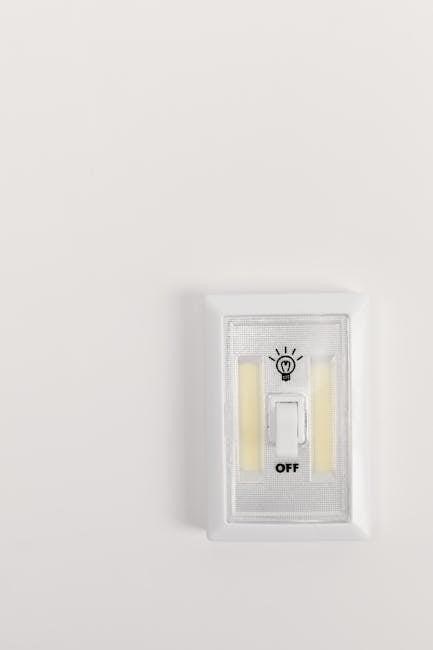
Smart switch integration, guided by a 2-way switch wiring diagram PDF, often requires neutral wires and careful consideration of traveler wire configurations.
Compatibility Considerations for Smart Switches
Before integrating a smart switch into a 2-way circuit, thoroughly review a 2-way switch wiring diagram PDF to assess compatibility. Key factors include neutral wire requirements – some smart switches necessitate a neutral wire, while others don’t.
Additionally, confirm the smart switch supports multi-way configurations. Older switches might not function correctly. Consider the communication protocol (Wi-Fi, Zigbee, Z-Wave) and ensure it aligns with your smart home hub.
Capacitor requirements are also crucial; some setups need capacitors to prevent flickering. Finally, verify voltage and wattage ratings to avoid overloading the circuit.
Wiring a Smart Switch with a Traditional Switch
Referencing a detailed 2-way switch wiring diagram PDF is paramount when combining smart and traditional switches. Typically, the smart switch replaces one existing switch, while the other remains conventional.
Identify the common, traveler, and line/load wires using the diagram. Connect the smart switch’s corresponding terminals accordingly. Ensure proper grounding.
Often, the traveler wires connect to the traveler terminals on both switches. The line/load wire connects to the appropriate terminal on the smart switch. Carefully follow the PDF’s instructions to avoid incorrect wiring and potential hazards.

Safety Precautions When Working with Electrical Wiring
Always disconnect power at the breaker before working with wiring, referencing a 2-way switch wiring diagram PDF for clarity and safety.
Turning Off Power at the Breaker
Before commencing any work involving a 2-way switch, and while consulting a 2-way switch wiring diagram PDF, absolutely prioritize safety by completely disconnecting the power supply. Locate the electrical panel and identify the circuit breaker controlling the specific switch you’ll be working on. Flip the breaker to the “OFF” position.
Crucially, verify the power is indeed off using a non-contact voltage tester at the switch terminals. Never assume the breaker is correctly labeled; always test! This step prevents electrical shock and ensures a safe working environment. A PDF diagram helps visualize the circuit, but doesn’t replace this vital safety check.
Using Proper Tools and Protective Gear
When referencing a 2-way switch wiring diagram PDF and undertaking electrical work, employing the correct tools is paramount. Insulated screwdrivers, wire strippers, pliers, and a voltage tester are essential. Avoid using tools with damaged insulation.
Furthermore, personal protective equipment (PPE) is non-negotiable. Wear safety glasses to shield your eyes, and consider insulated gloves for added protection. Appropriate footwear is also vital. A clear PDF diagram aids understanding, but doesn’t substitute for safe practices and quality equipment, minimizing risk during installation.
Advanced 2-Way Switch Configurations
Complex setups, detailed in a 2-way switch wiring diagram PDF, involve series connections or controlling receptacles, demanding careful planning and execution.
Wiring Multiple 2-Way Switches in Series
Extending 2-way control to multiple locations necessitates a series configuration, meticulously illustrated in a comprehensive 2-way switch wiring diagram PDF. This involves connecting switches sequentially, where the output of one switch becomes the input of the next. Each switch then acts as an intermediary, controlling the power flow to the light fixture.
Crucially, proper traveler wire routing is paramount; incorrect connections will disrupt functionality. A detailed PDF diagram will clearly show how to maintain continuity and ensure each switch effectively toggles the circuit. Understanding the common terminal’s role in each switch is also vital for successful implementation. Always prioritize safety and consult a qualified electrician if unsure.
Using a 2-Way Switch to Control a Receptacle
Adapting a 2-way switch setup to control a receptacle, rather than a light, requires careful wiring, best understood through a detailed 2-way switch wiring diagram PDF. The fundamental principle remains the same – utilizing traveler wires to enable control from two locations. However, the receptacle’s hot and neutral connections must be integrated correctly into the circuit.
A PDF guide will illustrate how to connect the switched hot wire to the receptacle’s hot terminal, while the neutral wire remains directly connected to the power source. Ensure proper grounding for safety. Always verify the wiring with a qualified electrician before energizing the circuit.

Resources for 2-Way Switch Wiring Diagrams (PDF)
Numerous online databases and electrical websites offer free 2-way switch wiring diagram PDFs, alongside manufacturer guides for specific switch models.
Online Databases and Electrical Websites
Several reputable online resources provide accessible 2-way switch wiring diagrams in PDF format. Websites like Electrician2.com and DIYchatroom.com host extensive collections, often categorized by wiring scenario and switch type. Additionally, electrical forums frequently feature user-submitted diagrams and troubleshooting advice. Many manufacturers, such as Lutron and Leviton, offer downloadable PDF wiring guides specifically for their products on their official websites. These guides ensure compatibility and correct installation. Remember to verify the diagram’s accuracy and relevance to your specific setup before proceeding with any electrical work, and always prioritize safety.

Manufacturer’s Wiring Guides
Accessing PDF wiring diagrams directly from switch manufacturers is crucial for accurate installations; Companies like GE, Leviton, and Lutron provide detailed guides on their websites, tailored to their specific 2-way switch models. These guides often include step-by-step instructions, component lists, and troubleshooting tips. PDF documents ensure consistent formatting and easy printing for on-site reference. Utilizing manufacturer resources guarantees compatibility and adherence to recommended wiring practices, minimizing potential issues. Always prioritize these guides over generic diagrams, as switch designs can vary significantly between brands.
Understanding Electrical Codes and Regulations
Always consult local codes before wiring; PDF diagrams must reflect these rules for safety and legal compliance during 2-way switch installations.
Local and National Electrical Code Requirements
Electrical work, including 2-way switch wiring, is heavily governed by both national and local codes – the National Electrical Code (NEC) being the primary standard in the US. PDF wiring diagrams should always align with these regulations. Local amendments often supersede NEC guidelines, demanding careful review of your area’s specific rules.
Key requirements involve proper grounding, wire gauge selection based on circuit amperage, and secure connections within electrical boxes. Diagrams must clearly illustrate these elements. Permits and inspections are frequently mandated to ensure compliance, safeguarding against fire hazards and ensuring the installation meets safety standards. Ignoring these codes can lead to fines and, more importantly, dangerous situations.
Importance of Permitting and Inspections
Obtaining permits before undertaking 2-way switch wiring, even with a detailed PDF diagram, is crucial for legal compliance and safety. Permits demonstrate adherence to local electrical codes, protecting both the homeowner and future occupants. Following installation, a qualified electrical inspector verifies the work meets these standards.
Inspections aren’t about finding fault, but ensuring a safe and functional electrical system. They confirm proper grounding, wiring connections, and box fill capacity; A passed inspection provides peace of mind and is often required for insurance claims related to electrical issues. Skipping this step can void warranties and create significant risks.