

The Curious Incident of the Dog in the Nighttime: A Comprehensive Overview
Decatur’s 2023 burglary‚ reminiscent of Sherlock Holmes‚ was solved using clues from a seemingly inactive dog. This “curious incident” parallels the novel’s core mystery‚ often found in PDF format for study.
Origins and Context of the Phrase
The phrase “the curious incident of the dog in the nighttime” originates from a Sherlock Holmes story‚ “Silver Blaze‚” penned by Sir Arthur Conan Doyle. Within the narrative‚ a dog’s failure to bark at a crucial moment during a crime is the central‚ perplexing detail. This seemingly insignificant incident – or lack thereof – becomes pivotal to unraveling the mystery.
Interestingly‚ the phrase resurfaced in contemporary times due to a 2023 burglary case in Decatur‚ Illinois. Police successfully solved the crime by focusing on a dog’s unusual inaction‚ echoing the Holmesian premise. News reports highlighted this parallel‚ drawing attention back to the original literary source.
The phrase’s enduring appeal lies in its subtle complexity. It isn’t the dog’s action‚ but its inaction that’s noteworthy. This highlights the importance of observing what doesn’t happen‚ a key principle in detective work and critical thinking. Many analyses of the phrase‚ and Mark Haddon’s novel inspired by it‚ are readily available in PDF format online‚ offering deeper contextual understanding. These resources often explore the philosophical implications of the phrase and its connection to perception and deduction.
The Decatur Burglary Case (2023)
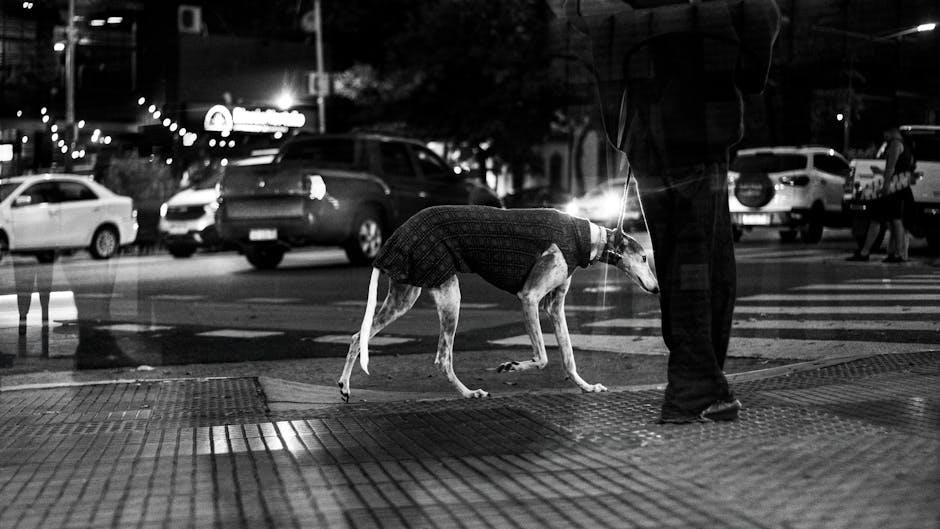
In September 2023‚ the Decatur‚ Illinois police department solved a burglary case utilizing a detail strikingly similar to the premise of Sir Arthur Conan Doyle’s “Silver Blaze” – the curious inaction of a dog. The case garnered local attention as investigators focused on why the resident’s dog didn’t bark during the commission of the crime.
Like a modern-day Sherlock Holmes investigation‚ the dog’s silence provided a crucial clue. The absence of a typical canine response suggested the perpetrator was likely known to the dog‚ or had approached in a manner that didn’t trigger a defensive reaction. This insight narrowed the suspect pool considerably.
News outlets reported on the case‚ explicitly referencing the “curious incident of the dog in the nighttime‚” drawing a direct line to the literary origin. Detailed reports‚ and analyses of the case’s investigative techniques‚ are available in PDF format from various news sources and law enforcement publications. These documents showcase how seemingly minor details‚ like a dog’s lack of response‚ can be instrumental in solving criminal investigations‚ mirroring the narrative’s central theme.

Connection to the Novel by Mark Haddon
Mark Haddon’s novel‚ The Curious Incident of the Dog in the Nighttime‚ derives its title directly from a peculiar idiom. The phrase itself‚ referencing a time when something is notably absent or unusual‚ sets the stage for the story’s central mystery: the death of Wellington‚ the neighbor’s dog.
The novel’s protagonist‚ Christopher John Francis Boone‚ investigates Wellington’s death with a logical‚ detail-oriented approach‚ mirroring the investigative process seen in the 2023 Decatur burglary case. Both scenarios highlight the significance of observing what doesn’t happen‚ rather than solely focusing on overt actions.
The connection extends beyond the literal “dog in the nighttime.” The phrase embodies the novel’s exploration of perception‚ difference‚ and the challenges of interpreting the world. Scholarly analyses and student guides exploring these themes are widely available in PDF format. These resources often dissect the symbolic weight of the title and its relevance to Christopher’s unique worldview‚ demonstrating how a seemingly simple incident can unlock deeper layers of meaning.
Mark Haddon’s Novel: Plot Summary
The Curious Incident of the Dog in the Nighttime unfolds through the eyes of Christopher John Francis Boone‚ a fifteen-year-old boy with autism spectrum disorder. The narrative begins with Christopher discovering Wellington‚ the neighbor’s dog‚ impaled with a garden fork. Determined to solve the mystery‚ he meticulously documents his investigation in a novel-like journal.
Christopher’s inquiry leads him to uncover secrets about his own family‚ specifically regarding his mother’s presumed death and his father’s hidden truths. His investigation isn’t a conventional detective story; it’s a journey of self-discovery‚ fraught with social anxieties and sensory overload.
As Christopher pieces together the events‚ he decides to travel from his home in Swindon to London to reunite with his mother‚ who is‚ in fact‚ alive. This journey presents significant challenges for Christopher‚ forcing him to confront his fears and navigate an overwhelming world. Detailed plot summaries and character analyses‚ often available as PDF documents‚ provide deeper insights into the complexities of this compelling narrative and the central incident that sets the story in motion.
Christopher John Francis Boone: The Protagonist
Christopher John Francis Boone is a uniquely compelling character – a fifteen-year-old boy with autism spectrum disorder‚ possessing a brilliant mind but struggling with everyday social interactions. He excels in mathematics and science‚ viewing the world through a logical‚ pattern-based lens. He dislikes being touched‚ struggles with metaphors and lies‚ and finds comfort in routine and predictability.
His narration is strikingly honest and direct‚ offering a raw and unfiltered perspective on his experiences. The initial incident – the death of Wellington the dog – serves as a catalyst for his investigation and reveals his strong sense of justice and determination.

Christopher’s character is meticulously crafted‚ and understanding his perspective is central to appreciating the novel’s themes. Extensive character studies‚ often found in academic analyses available as PDF resources‚ delve into the nuances of his condition and how it shapes his interactions with the world. He embodies both vulnerability and resilience‚ making him a profoundly memorable protagonist‚ whose journey resonates deeply with readers.
Narrative Style and Perspective

Mark Haddon employs a first-person narrative‚ told entirely from Christopher John Francis Boone’s perspective. This stylistic choice is crucial‚ immersing the reader directly into his unique thought processes and sensory experiences. The narrative is characterized by its directness‚ literal interpretations‚ and avoidance of figurative language – mirroring Christopher’s autistic way of perceiving the world.
The prose is remarkably precise and detailed‚ often focusing on minute observations that others might overlook. This creates a sense of authenticity and allows readers to understand the world as Christopher does. The lack of quotation marks for dialogue further emphasizes his difficulty interpreting social cues and understanding implied meanings.
Scholarly articles‚ frequently available as PDF documents‚ analyze this narrative technique extensively‚ highlighting its effectiveness in conveying Christopher’s internal world. The novel’s impact stems significantly from how the story is told‚ not just what happens‚ particularly concerning the initial incident with Wellington. This unique style challenges conventional storytelling norms and fosters empathy for neurodiversity.

Themes Explored in the Novel
The Curious Incident of the Dog in the Nighttime delves into several profound themes‚ including neurodiversity‚ family relationships‚ truth versus perception‚ and the challenges of navigating a neurotypical world. Christopher’s investigation into Wellington’s death serves as a catalyst for exploring these complex ideas.
The novel powerfully portrays the difficulties faced by individuals with Autism Spectrum Disorder‚ highlighting the misunderstandings and prejudices they often encounter. Simultaneously‚ it examines the strains within Christopher’s family‚ revealing secrets and the complexities of parental love and sacrifice.
The concept of truth is central‚ as Christopher prioritizes factual accuracy and logical reasoning. This contrasts with the subjective and often unreliable nature of human perception. Many academic analyses‚ readily accessible as PDFs‚ dissect the symbolism surrounding the initial incident and its broader implications. The narrative also questions societal norms and encourages readers to challenge their own assumptions about difference and acceptance.
Autism Spectrum Disorder Representation
Mark Haddon’s portrayal of Christopher John Francis Boone is widely lauded for its sensitive and insightful representation of Autism Spectrum Disorder (ASD). The novel doesn’t explicitly label Christopher‚ but his behaviors‚ thought processes‚ and sensory sensitivities strongly align with characteristics associated with ASD.
Haddon meticulously crafts Christopher’s narrative voice‚ utilizing first-person perspective to immerse readers in his unique worldview. This allows for a direct understanding of his challenges with social interaction‚ figurative language‚ and emotional regulation. The author avoids romanticizing or sensationalizing ASD‚ instead presenting a realistic and nuanced depiction.
Scholarly articles and critical essays‚ frequently available as PDF documents‚ analyze the novel’s impact on public understanding of neurodiversity. Discussions often center on the incident with the dog as a trigger for exploring Christopher’s internal landscape. The book’s success has contributed to increased awareness and empathy towards individuals on the autism spectrum‚ fostering a more inclusive dialogue.
Critical Reception and Awards
The Curious Incident of the Dog in the Nighttime garnered widespread critical acclaim upon its 2003 publication‚ praised for its originality‚ emotional depth‚ and unique narrative voice. Reviewers consistently highlighted Mark Haddon’s skillful portrayal of a neurodivergent protagonist and his ability to convey a complex inner world.
The novel’s success extended beyond critical circles‚ achieving significant commercial success and becoming a long-running bestseller. It resonated with a broad readership‚ sparking conversations about autism‚ family dynamics‚ and the challenges of navigating a neurotypical society.
Numerous accolades followed‚ including the Whitbread Book of the Year award (now the Costa Book Award) in 2003‚ a rare achievement for a novel aimed at both young adults and adults. Digital copies and scholarly analyses‚ often found as PDFs‚ detail the book’s impact. The incident involving the dog served as a compelling narrative hook‚ drawing readers into Christopher’s story and contributing to the novel’s enduring popularity.
Adaptations: Stage Play
Marianne Elliott’s 2012 stage adaptation of The Curious Incident of the Dog in the Nighttime‚ presented by the National Theatre and later transferring to the West End and Broadway‚ was a groundbreaking theatrical achievement. The production ingeniously translated Christopher Boone’s internal world onto the stage‚ employing innovative staging‚ lighting‚ and projections to represent his sensory experiences and thought processes.
The play’s success stemmed from its faithful adherence to the novel’s narrative while simultaneously creating a visually stunning and emotionally resonant theatrical experience. It won seven Tony Awards in 2015‚ including Best Play and Best Director‚ solidifying its status as a landmark production.
Detailed analyses of the play’s design and impact are readily available online‚ often in PDF format‚ for students and theatre enthusiasts. The central incident – the dog’s death – remains a pivotal moment‚ powerfully depicted through the play’s unique staging. Scripts and production photos are also frequently shared as downloadable PDFs‚ allowing for deeper study of this acclaimed adaptation.
Adaptations: Film and Television
Despite the critical and commercial success of the stage play‚ a direct film or television adaptation of The Curious Incident of the Dog in the Nighttime has proven elusive. Concerns regarding accurately portraying Christopher Boone’s unique perspective and internal world have likely contributed to this hesitancy. Capturing the novel’s narrative style – first-person‚ present tense‚ and intensely detailed – presents a significant challenge for visual mediums.
While no official adaptation currently exists‚ numerous articles and academic papers analyzing the potential challenges and opportunities of such a project are available. These resources‚ often found as downloadable PDF documents‚ explore how filmmakers could translate the novel’s complex themes and narrative structure to the screen.
Discussions frequently center on casting and visual representation of Christopher’s autism‚ ensuring respectful and authentic portrayal. The core incident – the investigation of Wellington’s death – would undoubtedly form the central plot point‚ but conveying Christopher’s internal logic remains a key hurdle. Detailed analyses and proposed adaptation strategies are widely circulated in PDF format online.
The Significance of the “Dog in the Nighttime” Metaphor

The phrase “the curious incident of the dog in the nighttime” originates from a Sherlock Holmes story‚ and its inclusion in Mark Haddon’s novel is deeply symbolic. It represents something obvious that is‚ paradoxically‚ unnoticed or misunderstood. Just as the dog’s bark goes unheard in the night‚ Christopher’s experiences and perspectives often go unacknowledged by those around him.
The metaphor highlights the theme of perception and the difficulty of understanding others‚ particularly those with neurodevelopmental differences. The incident itself – the death of Wellington – serves as a catalyst for Christopher’s investigation‚ but the true “incident” lies in the societal failure to recognize and accommodate his unique way of seeing the world.
Scholarly analyses of the novel‚ frequently available as PDF documents‚ delve into the layered meanings of this metaphor. These resources explore how Haddon uses it to challenge conventional notions of normalcy and empathy. The phrase’s enduring power lies in its ability to encapsulate the feeling of being overlooked or misunderstood‚ a common experience for individuals on the autism spectrum. Further exploration of this symbolism can be found in various academic PDFs.
Incident vs. Accident: Semantic Differences
While often used interchangeably‚ “incident” and “accident” possess distinct semantic nuances. An incident generally refers to an event or occurrence‚ often unplanned‚ but not necessarily implying harm or negligence. Conversely‚ an “accident” typically suggests an unforeseen event causing damage‚ injury‚ or loss‚ often with an implication of unintentional fault.

In the context of the “curious incident of the dog in the nighttime‚” the term is deliberately chosen. The dog’s death‚ while a tragic event‚ isn’t initially presented as an accident with a clear cause. It’s an incident requiring investigation‚ a puzzle to be solved by Christopher. This distinction is crucial to understanding the novel’s focus on observation and deduction.
Detailed analyses of Haddon’s word choice‚ readily available in academic PDFs‚ emphasize this point. The novel isn’t about a careless mishap; it’s about a perplexing event that unravels deeper societal issues. Understanding this semantic difference enriches the reading experience and highlights the author’s deliberate crafting of language. Further study‚ often found in downloadable PDF format‚ reveals the importance of precise terminology within the narrative.
Affair‚ Matter‚ Event‚ and Incident: Usage Distinctions
The terms “affair‚” “matter‚” “event‚” and “incident” represent a spectrum of occurrences‚ differing in scope and implication. An “affair” denotes a broad range of happenings‚ often complex or involving multiple parties. A “matter” is generally a subject or issue requiring attention‚ while an “event” signifies a specific occurrence‚ often planned or noteworthy.
An “incident‚” as highlighted by analyses of “The Curious Incident of the Dog in the Nighttime” (available in PDF format)‚ is a specific‚ often unplanned occurrence. The dog’s death is presented as an incident – a discrete event demanding investigation‚ not a sprawling “affair” or a general “matter.”
Scholarly PDFs dissect Haddon’s deliberate choice of “incident‚” emphasizing its neutrality. It doesn’t pre-judge the cause or severity. The novel’s power lies in its meticulous unraveling of this single incident. Distinguishing these terms clarifies the narrative’s focus. The investigation isn’t a broad “affair” but a concentrated effort to understand one specific incident. These nuances‚ explored in detailed academic resources‚ enhance comprehension of the novel’s thematic depth and stylistic precision.

Soller Slits and Incident Beams in Scientific Context
While seemingly disparate‚ the scientific concepts of “Soller slits” and “incident beams” share a common thread: focused analysis. Soller slits‚ used in X-ray diffraction‚ collimate incident beams‚ reducing divergence for clearer data. This precision mirrors the meticulous observation central to “The Curious Incident of the Dog in the Nighttime‚” readily available as a PDF for detailed study.

Just as a Soller slit focuses a beam‚ Christopher Boone focuses intensely on details‚ dissecting the incident with the dog with scientific rigor. The “divergence slit” mentioned alongside Soller slits represents the scattering of information – akin to the initial confusion surrounding the dog’s death.
Analyzing the novel as a PDF reveals how Haddon employs a similar principle: narrowing focus to illuminate truth. The incident isn’t viewed broadly but through Christopher’s unique‚ analytical lens. This parallels the scientific method‚ where a controlled incident beam‚ shaped by Soller slits‚ yields precise results. Both emphasize the power of concentrated observation and the reduction of extraneous factors to reveal underlying realities.
The Role of Online Learning Platforms (e.g.‚ ) in Education
Online learning platforms‚ like (ZuoyeBang)‚ demonstrate the increasing accessibility of educational resources‚ mirroring the widespread availability of “The Curious Incident of the Dog in the Nighttime” as a PDF. These platforms‚ offering vast question banks and peer support‚ facilitate learning – much like studying a complex novel benefits from shared analysis.
ZuoyeBang’s success‚ assisting students in improving their academic standing‚ highlights the power of readily available information. Similarly‚ the novel’s PDF format allows students globally to engage with Haddon’s work‚ fostering discussion and critical thinking. The platform’s “300” (3 million top students answering questions online) echoes the collaborative learning environment often sparked by literary study.
Both online platforms and accessible PDFs democratize knowledge. Just as ZuoyeBang helps students overcome academic challenges‚ analyzing the incident within the novel – through readily available resources – promotes deeper understanding. These tools empower learners‚ fostering independent thought and a more comprehensive grasp of complex subjects.